

If you want cheap fiber in snack form, buy popcorn kernels and it’s not even close. Plain kernels deliver 57.7 grams of fiber per dollar based on USDA data and July 2026 prices, which is 9.2 times more than raisins, the worst deal in our snack ranking at 6.3 grams per dollar. The gap between the best and worst high-fiber snack is bigger than in almost any other food category we’ve run the numbers on.
We pulled the 10 most snackable foods from our full fiber per dollar study and ranked them. Here’s the whole list.
| Rank | Snack | Fiber per $1 | Package | Price |
|---|---|---|---|---|
| 1 | Popcorn kernels | 57.7 g | 2 lb bag | $2.28 |
| 2 | Carrots (whole, bagged) | 16.1 g | 2 lb bag | $1.58 |
| 3 | Dry roasted peanuts | 13.7 g | 16 oz jar | $2.78 |
| 4 | Sunflower seed kernels | 13.1 g | 16 oz bag | $2.98 |
| 5 | Bananas | 11.6 g | per lb | $0.65 |
| 6 | Peanut butter | 11.4 g | 40 oz jar | $4.97 |
| 7 | Almonds | 8.8 g | 16 oz bag | $6.47 |
| 8 | Prunes (dried plums) | 8.1 g | 16 oz bag | $3.98 |
| 9 | Apples (gala) | 7.7 g | per lb | $1.28 |
| 10 | Raisins | 6.3 g | 20 oz canister | $3.34 |
Source: USDA FoodData Central + single-store prices, July 2026. Full methodology at /methodology/.
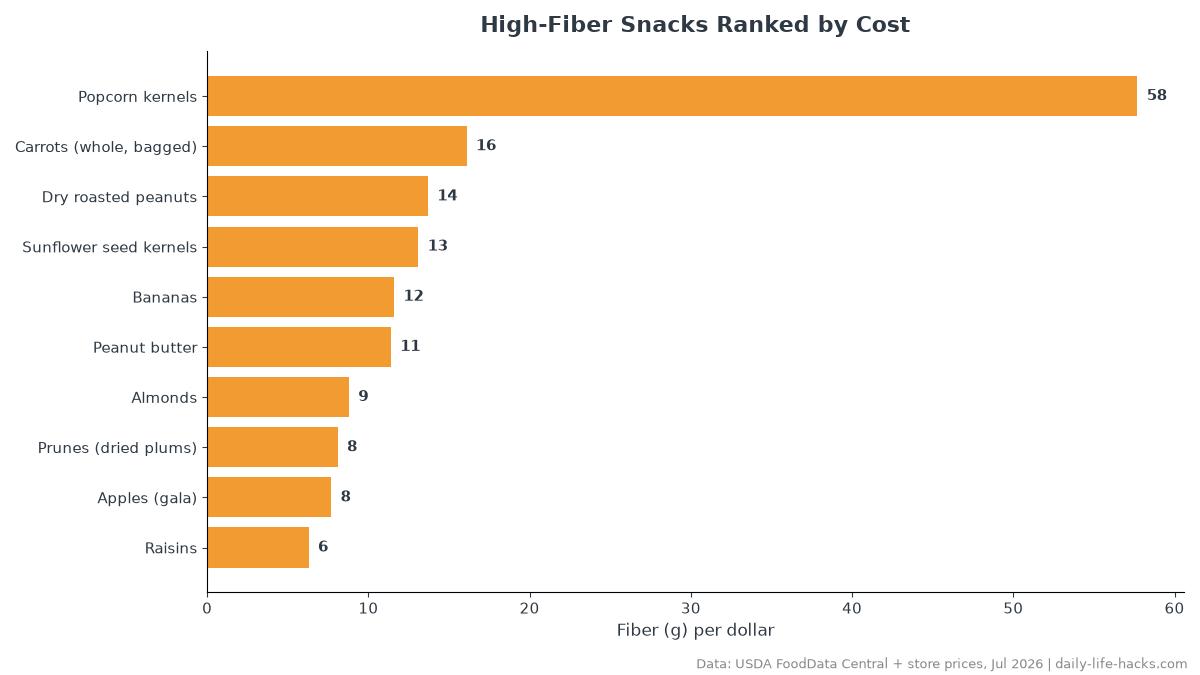
Why is popcorn the cheapest high-fiber snack?
Because you’re buying a whole grain at bulk-commodity prices and nobody told the snack aisle. A 2 lb bag of plain kernels runs $2.28, and the fiber math works out to 57.7 grams per dollar. Second place, carrots, manages 16.1. That’s not a race, that’s a lapping.
The catch is the word “plain.” This ranking is for kernels you pop yourself, on the stove or in a paper bag in the microwave, not the pre-bagged butter-blasted stuff. Popped at home, it’s the rare snack that’s genuinely cheap, genuinely high in fiber, and still feels like something you’d eat during a movie. If you want a second DIY snack in that same spirit, crispy roasted chickpeas scratch the crunchy-salty itch too.
Are nuts and seeds worth it for fiber?
The cheap ones are. Dry roasted peanuts come in at 13.7 grams of fiber per dollar with a 16 oz jar at $2.78, and sunflower seed kernels land right behind at 13.1. Peanut butter holds its own at 11.4 grams per dollar, and the $4.97 jar is a 40 oz monster that lasts long enough to become a household member. It also anchors these no-bake oat and flax energy balls, which turn pantry staples into something that feels like a bakery purchase.
Almonds are where the math turns on you. At $6.47 for a 16 oz bag, they manage 8.8 grams of fiber per dollar, behind bananas. Almonds are fine food with real fiber in them. They’re just priced like a treasure, so buy them because you like them, not because a wellness post said they’re a fiber snack.
Is fresh fruit or dried fruit the better snack fiber deal?
Fresh wins, which surprised me too. Bananas deliver 11.6 grams of fiber per dollar at $0.65 a pound, beating both prunes (8.1) and raisins (6.3). Gala apples at 7.7 grams per dollar essentially tie prunes while costing $1.28 a pound instead of $3.98 a bag.
Drying fruit concentrates the sugar and the price faster than it concentrates the value. Raisins at $3.34 for a 20 oz canister are the clearest example: last place at 6.3 grams per dollar, about a ninth of what popcorn gives you. Raisins aren’t bad food. They’re just an expensive place to shop for fiber.
What does a smart high-fiber snack setup actually look like?
Three purchases, under $7 total by these prices: popcorn kernels ($2.28), a bag of carrots ($1.58), and a jar of peanuts ($2.78). That covers salty-crunchy, fresh-crunchy, and rich, which is most of what a snack craving is asking for. Carrots get a serious upgrade from a batch of homemade high-fiber hummus, and if your cravings show up after dinner, these nighttime sweet tooth snack ideas lean on fruit and peanut butter rather than the cookie sleeve.
The bigger picture: snacks are where fiber budgets quietly die, because the default options are refined and priced for convenience. Pick from the top half of this table and snacking starts working for your fiber intake instead of against it. If you want to see how snacks fit into a full day of cheap fiber, the complete budget fiber guide puts the whole plan together.


