
Dry beans versus the can
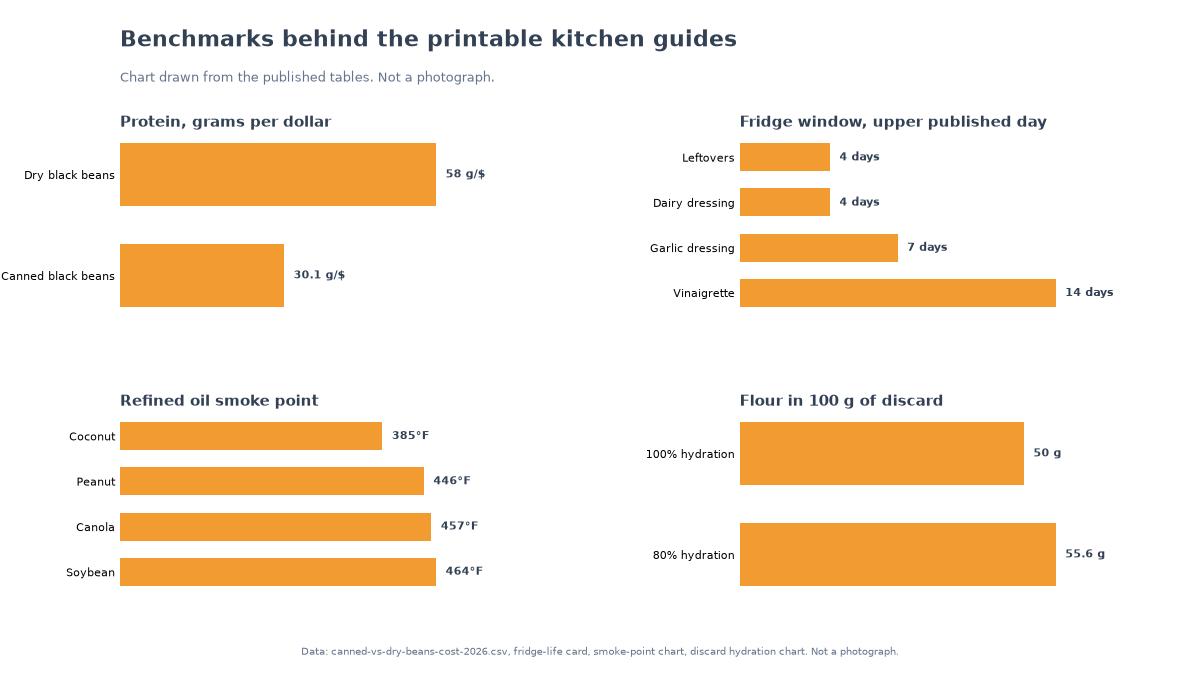
One pound dried still cooks to about 6 cups, which is 3½ to 4 (15-oz) cans. One can is about 1.5 cups drained. That's the card. The price is a different sentence. In canned-vs-dry-beans-cost-2026.csv, dry black beans are a 2 lb bag at $3.38 and return 58.0 grams of protein per dollar. The canned black beans are a 15.5 oz can at $0.88 and return 30.1. Same bean, more water, fewer grams per dollar. A can is dinner tonight. A bag is dinner after the pot finishes.
Fridge windows worth taping up
Cooked meat on the fridge card is 3 to 4 days. That 3 to 4 day leftovers window is the USDA cold-storage figure the card copies, and the chart uses the upper day so the bar has one number. Dairy dressing is the same 3 to 4 days. Fresh garlic or herbs shortens the fancy vinaigrette to Up to 1 week. A plain vinaigrette, oil and vinegar and dried spices, is Up to 2 weeks. Cooked grains and beans don't all share that leftovers line. Their page is in the chart-study list below.
Smoke points with one lab number
The smoke-point printable copies the lab table, including the two oils that table refuses to number. This chart only draws the single readings: coconut 385°F, peanut 446°F, canola 457°F, soybean 464°F. Olive oil is a range on that page, so it doesn't get to pretend it's one bar. If the bottle says cold-pressed and the table says refined, believe the bottle in your hand, not the taller bar.
100% discard versus 80%
The cheat sheet is the pourable jar. One cup is 227 grams, and at 100% hydration a 100 gram pour is 50 grams of flour and 50 grams of water. The same 100 gram scoop at 80% is 55.6 grams of flour and 44.4 grams of water. That's the gap on the chart. Use the stiff scoop in a pancake card written for a pourable jar and the batter turns into spackle. Weigh it.
The planner is paper on purpose
The two-page grocery planner doesn't contain a gram-per-dollar reading, so I didn't invent one to fill a fifth panel. Write the week on the sheet. If you want the priced menus instead of a blank box, the weekly food cost planner already has them.
Chart studies that sit next to the sheets
The bean card, the fridge card, and the discard sheet each have a longer study. So do the dinners that use the same pantry: split pea curry, sheet-pan chicken, and overnight oats. Cooked meat gets its own fridge window, separate from the leftovers line on the card.
- canned versus dry beans, cost and sodium per serving
- cheapest frozen vegetables for fiber and protein
- cheapest shelf-stable pantry foods for protein
- how long cooked grains and beans last in the fridge
- sourdough discard hydration conversion chart
- protein and fiber in canned, frozen, and dry staples
- how long cooked meat and poultry last in the fridge
- sourdough discard as a buttermilk substitute
- sheet-pan chicken thighs and chickpeas
- budget green split pea and sweet potato curry
- high-protein overnight oats with chia and Greek yogurt