

Oatmeal has more fiber than grits, and the gap is bigger than most people guess. One cooked cup of oatmeal has about 4 grams of fiber, while the same amount of regular grits usually has roughly 1 to 2 grams, according to USDA FoodData Central. Oatmeal wins the plain-bowl comparison by about two to four times.
That doesn’t make grits a bad breakfast. It means the milling method matters, stone-ground grits are a smarter pick when fiber is the goal, and toppings have more work to do in a grits bowl. If you came here for permission to keep eating grits, permission granted. Just don’t ask the corn to impersonate oats.
What are the numbers side by side?
| Oatmeal (rolled or steel-cut) | Regular grits (degerminated) | Stone-ground grits | |
|---|---|---|---|
| Fiber, 1 cup cooked | ~4g | ~1 to 2g | ~2 to 3g |
| Fiber per 100g dry | ~10g | ~2 to 4g | ~5 to 7g |
| Whole grain? | Yes | No, germ and most bran removed | Mostly, kernel largely intact |
| Cook time | 5 to 25 min by cut | ~5 min | 30 to 50 min |
Source: USDA FoodData Central. Brands vary, so the bag in your pantry gets the final word.
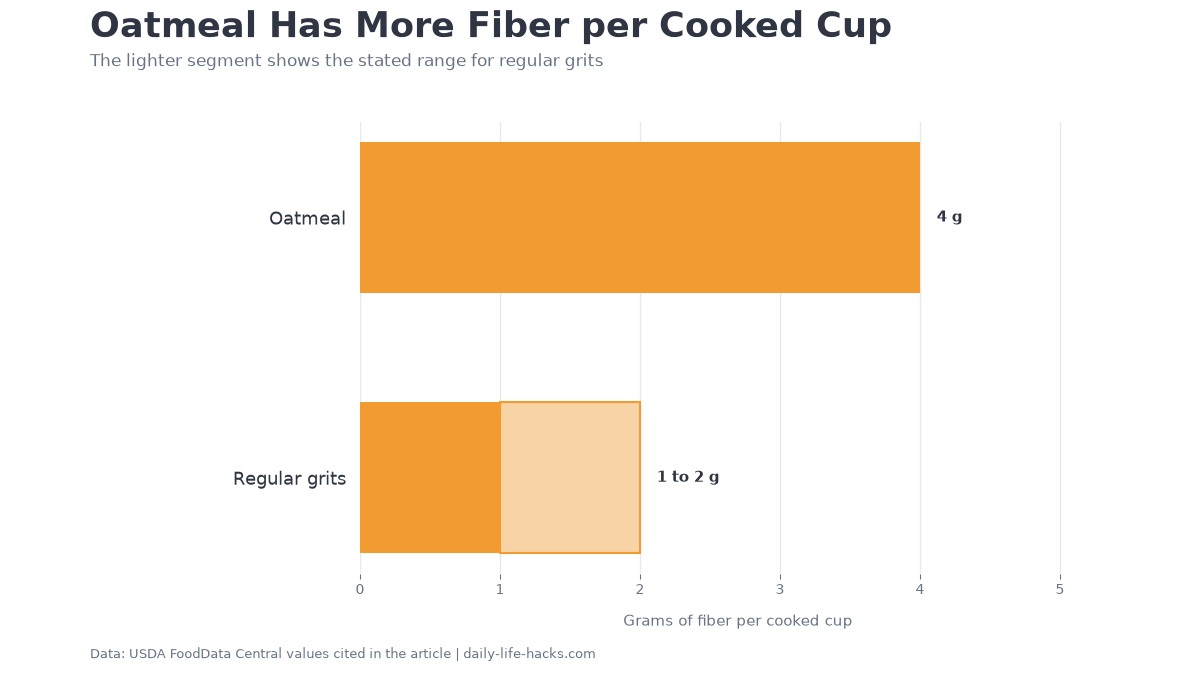
Against the FDA’s 28-gram Daily Value, a cooked cup of oatmeal provides about 14 percent before you add anything. A cup of regular grits may provide around 4 to 7 percent. Stone-ground grits can land between the two, but the label matters because milling and serving sizes aren’t identical across brands.
The phrase one cup cooked needs a little attention. A loose cup of oatmeal and a thick cup don’t contain exactly the same amount of dry grain. Grits can be served almost pourable or firm enough to hold a spoon upright. Water changes the volume, not the amount of fiber that went into the pot. If breakfast starts with the dry container, how much oatmeal counts as a serving gives you both the gram weight and the cooked yield before the measuring cup starts freelancing.
For a cleaner comparison at home, check the dry serving on both packages. If your oats list 4 grams of fiber per 40-gram serving and your grits list 1 gram per 40-gram serving, the oats have four times as much before cooking. That package-level comparison is more reliable than arguing over whose breakfast bowl is deeper.
Also check whether the grits are labeled stone-ground, whole grain, or degerminated. Those words tell you more than the front-of-box picture of a farmhouse. Food packaging has never been shy about assigning rustic scenery to highly processed corn.
Why do oats beat corn here?
Corn isn’t naturally a low-fiber grain. Whole corn carries bran, which is exactly why popcorn can be a strong fiber value; our popcorn versus potato chips comparison shows the numbers. Regular grits lose ground during processing.
Most quick and regular grits sold in paper canisters are degerminated. The germ and much of the bran are removed to improve shelf life, create a smoother texture, and shorten cooking. That’s convenient at 7:15 AM, but the bran is where much of the fiber lived. The bowl can’t keep what the mill already took away.
Rolled oats and steel-cut oats generally start with the whole oat groat. Steel-cut oats are chopped into small pieces. Rolled oats are steamed and flattened. The shape changes, the cooking time changes, and the texture changes, but the bran remains part of the grain in both cases.
Instant oats are usually whole grain too. They’re cut smaller, rolled thinner, and sometimes precooked, which is why hot water can finish the job quickly. Plain instant oats can have a similar fiber number to rolled oats. The flavored packet is a separate purchasing decision because added sugar, small portions, and dessert-adjacent names can distract from the actual grain.
The same processing lesson appears across the grain aisle. Our comparison of fiber in different pizza crusts lands in familiar territory: when more bran remains in the flour or grain, more fiber generally reaches the plate. “Whole” is doing actual work on the label. “Homestyle” is mostly wearing an apron.
When choosing between oatmeal and grits, turn the package around. Look for the dry serving size, grams of fiber, and whole-grain wording. It takes 15 seconds and settles the question better than the color of the box.
Are stone-ground grits worth the extra time?
If you already love grits, stone-ground is the version worth trying. It keeps more of the corn kernel, usually brings more fiber than regular degerminated grits, and tastes noticeably more like corn. Regular quick grits are a smooth background. Stone-ground grits have texture and opinions.
The tradeoff is real. Stone-ground grits commonly take 30 to 50 minutes, depending on the grind and the tenderness you want. Quick grits can be ready in about 5 minutes. That makes stone-ground grits a poor choice for a morning when you have eleven minutes between finding your keys and leaving the house.
Batch cooking fixes most of the inconvenience. Cook four servings on Sunday with water or milk and a pinch of salt. Cool the extra portions in shallow containers, then refrigerate. During the week, loosen one serving in a saucepan or microwave-safe bowl with a splash of water or milk. Stir halfway through reheating so the center doesn’t stay cold while the edges become masonry.
Stone-ground grits also need occasional stirring, not constant attention. Use a heavy pot, keep the heat low once they begin to thicken, and stir every few minutes. A wide pot cooks a little faster because more water can escape. A narrow pot splatters less. Choose based on whether speed or the cleanliness of your stove matters more that morning.
Price is less dramatic than it looks. Stone-ground grits cost more per package, but a bag still makes many servings. If a $6 bag makes 12 breakfasts, the grain costs about 50 cents per bowl. Oats are usually cheaper, which is one reason they appear so often in our fiber on a budget guide, but both bases remain inexpensive compared with a purchased breakfast.
Buy stone-ground grits for flavor and texture first. The higher fiber number is useful, but it won’t turn a plain bowl into oatmeal. If you don’t enjoy the coarse texture, regular grits with beans or vegetables is a better breakfast than a virtuous bag that sits unopened for nine months.
Rolled oats or steel-cut oats: does the cut change fiber?
Not much. Rolled oats, steel-cut oats, and plain instant oats are generally whole-grain products with similar fiber per dry gram. The meaningful differences are texture, cook time, and how easily each fits your morning.
Rolled oats take about 5 minutes on the stove and become soft and creamy. They’re also the easiest for overnight oats and baking. If breakfast has to happen between the coffee starting and the lunch bag getting zipped, rolled oats are the practical default.
Steel-cut oats usually take 20 to 30 minutes and stay chewy. They reheat well because the grains don’t collapse into paste as quickly. Make four portions at once, refrigerate them, and add a splash of water before reheating. The first bowl costs time. The next three are almost as fast as instant.
Plain instant oats win on speed. Read the serving size, because some packets contain less grain than a normal rolled-oat portion. Two small packets may match the volume of one bowl but bring a much sweeter flavor if they’re pre-seasoned. Buying plain instant oats lets you control what goes in.
Choose by texture. Rolled oats if you want creamy. Steel-cut if you want chew. Instant if you have a kettle and no patience. The fiber difference among those plain oat formats is small enough that forcing yourself to eat the one you dislike is nutritional theater.
How do you build either bowl into a real breakfast?
The base is only the first decision. A plain cup of oatmeal brings about 4 grams of fiber, but the toppings can move the total quickly. A medium banana adds roughly 3 grams. Raspberries bring about 4 grams per half cup. A tablespoon of chia seeds can add around 4 to 5 grams. Pick one fruit and one crunchy or creamy topping rather than emptying the pantry into the bowl.
For an oatmeal bowl that lands around 9 to 11 grams, cook rolled oats with milk or water, then add a sliced banana and a tablespoon of chia seeds. Stir the chia in after cooking so the bowl doesn’t become concrete while it’s still on the stove. Cinnamon and a spoonful of peanut butter make it taste finished. Our high-fiber breakfast ideas has more combinations when banana every morning starts to feel like a sentence.
Grits need a different plan. Sweet grits exist, but savory toppings make the fiber job easier. Start with stone-ground grits, then add half a cup of black beans for roughly 7 grams of fiber. A fried egg adds protein but no fiber, so include sauteed greens, roasted peppers, corn, or leftover chili if you want the bowl to climb higher.
One reliable combination is grits, black beans, a fried egg, and salsa. Another is grits with leftover three-bean chili and scallions. Both use the grits as the creamy base instead of demanding that they carry the full nutrition scorecard alone. That’s a better job description.
Texture matters here. Drain beans well before putting them on grits, or the bowl gets watery around the edges. Add roasted vegetables hot. Put crisp toppings on last. Oatmeal can tolerate fruit juice soaking into it; grits with a puddle of bean liquid looks like breakfast lost an argument.
Portion the toppings based on appetite, not on a need to win the highest number. A breakfast with 8 grams of fiber that you enjoy three times a week is more useful than a 15-gram bowl that feels like homework. Increase fiber gradually if your usual breakfast contains very little, and drink enough fluid alongside it.
Which bowl should you buy for your actual week?
Choose oatmeal when fiber per plain serving is the priority, when you like sweet breakfasts, or when five-minute cooking matters. Rolled oats are the easiest all-purpose package. They cook fast, work overnight, bake well, and accept nearly any fruit without complaining.
Choose regular grits when speed and a smooth savory base matter more than the fiber number. They’re useful under eggs, beans, vegetables, shrimp, or leftovers. Think of their lower fiber as information, then supply fiber elsewhere in the bowl or later in the day.
Choose stone-ground grits when flavor and corn texture are the point. Batch them on a slower morning and reheat portions. The additional cooking time buys a better bowl and often a better fiber number, but only if you plan around it.
If shelf space is tight, oats are the more flexible single purchase. If breakfast variety is the reason you keep eating breakfast at home, keep both. A canister of oats and a bag of grits cost less than two cafe breakfasts and solve very different moods.
Oatmeal wins the fiber comparison on its own. Stone-ground grits narrow the gap, and beans or vegetables can turn any grits bowl into a more substantial meal. Buy the base you’ll cook, read the package instead of the farmhouse picture, and build the rest of the bowl with a purpose. That’s the whole decision.


