
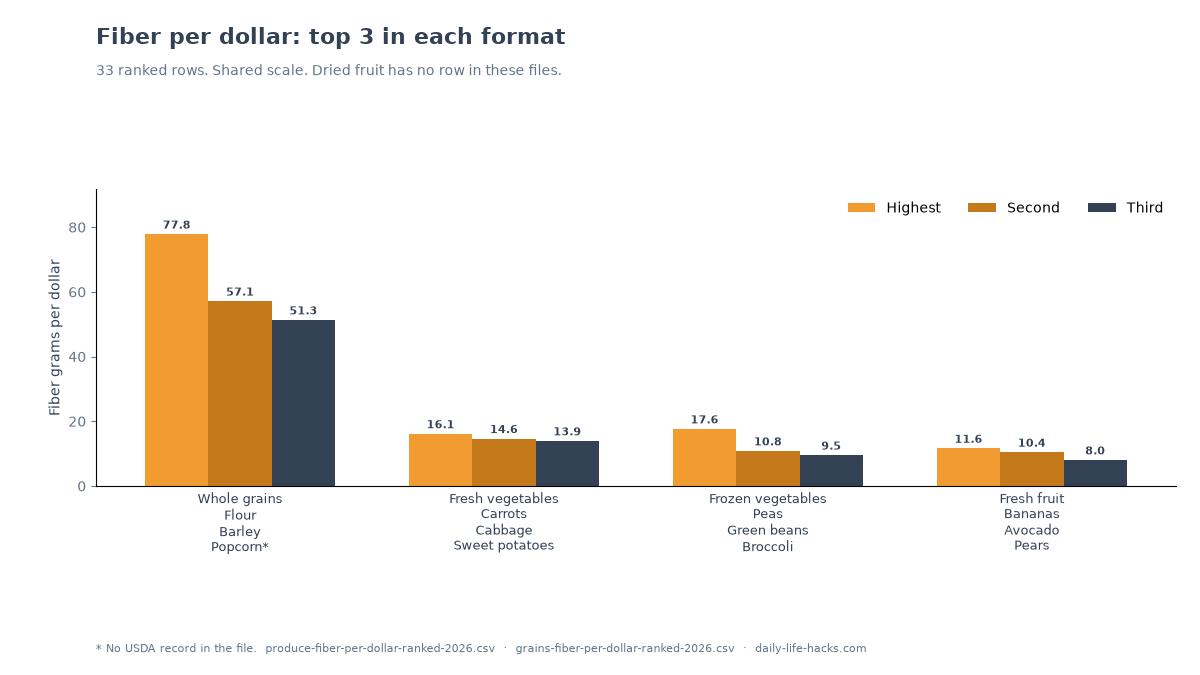
Why the flour number and the pea number can share a page
They're both fiber grams divided by a documented package price. Flour at 77.8 grams per dollar is a baking ingredient. Peas at 17.6 are closer to something you'd actually put next to dinner tonight. The index doesn't declare a winner. It stops you from comparing a memory of one file to a memory of the other.
Fresh produce here means the fresh vegetables and the fresh fruit. Frozen vegetables stay their own filter, because a bag of peas and a pint of blueberries are not the same shopping problem. Carrots, cabbage, sweet potatoes, and bananas are all in the table. So are the berries, which is where the fiber-per-dollar number gets humble.
Where the rows are explained
The cookable grain ranking, popcorn's missing USDA record included, is the cheapest whole grains for fiber per dollar. The 22 produce rows, edamame's missing record included, are the cheapest high-fiber fruits and vegetables. Price rules sit on the methodology page. If the question is how many days the cooked batch lasts, that's the pantry meal cost and storage planner, not this filter. A thawed freezer bag is a shorter clock: how long thawed frozen vegetables last in the fridge puts the FoodKeeper windows next to the package price.
Filenames, since the files aren't linked from this page: produce-fiber-per-dollar-ranked-2026.csv, grains-fiber-per-dollar-ranked-2026.csv, and fiber-day-cost-2026.csv. All three are in the public data folder.